A subscription email lands in your inbox. The tool you built half your week around is going up 40 percent next month. Or the one feature you used is now “Enterprise only.” Or the company got quietly acquired, and the product sunsets in ninety days. You didn’t do anything wrong. You rented something, and the landlord changed the terms.
This happens constantly. It happens fastest with AI tools, because the whole category is new and the companies behind it are young.
The tool was never yours
Most of what gets sold as an “AI tool” is a login. You pay every month, you get an interface, and behind that interface sits code you’re not allowed to see. It works well right up until it doesn’t. The price moves. The terms change. The company pivots, or folds, and your workflow goes with it.
You can’t read it. You can’t fix it. You can’t keep it running on your own if the lights go out at head office. When someone says “I use such-and-such for X,” what they often mean is this: “I’m renting the ability to do X, for as long as a company I’ve never met decides to let me.”
That’s a fragile place to run a business from. Especially a one-person business, where you are the whole operations department.
Renting the model is fine. Renting the tool isn’t.
We’re not against paying for services. I rent access to Claude every month and I’m glad to. Frontier models cost a fortune to build and run, and nobody is shipping one from a laptop. Renting the model makes sense.
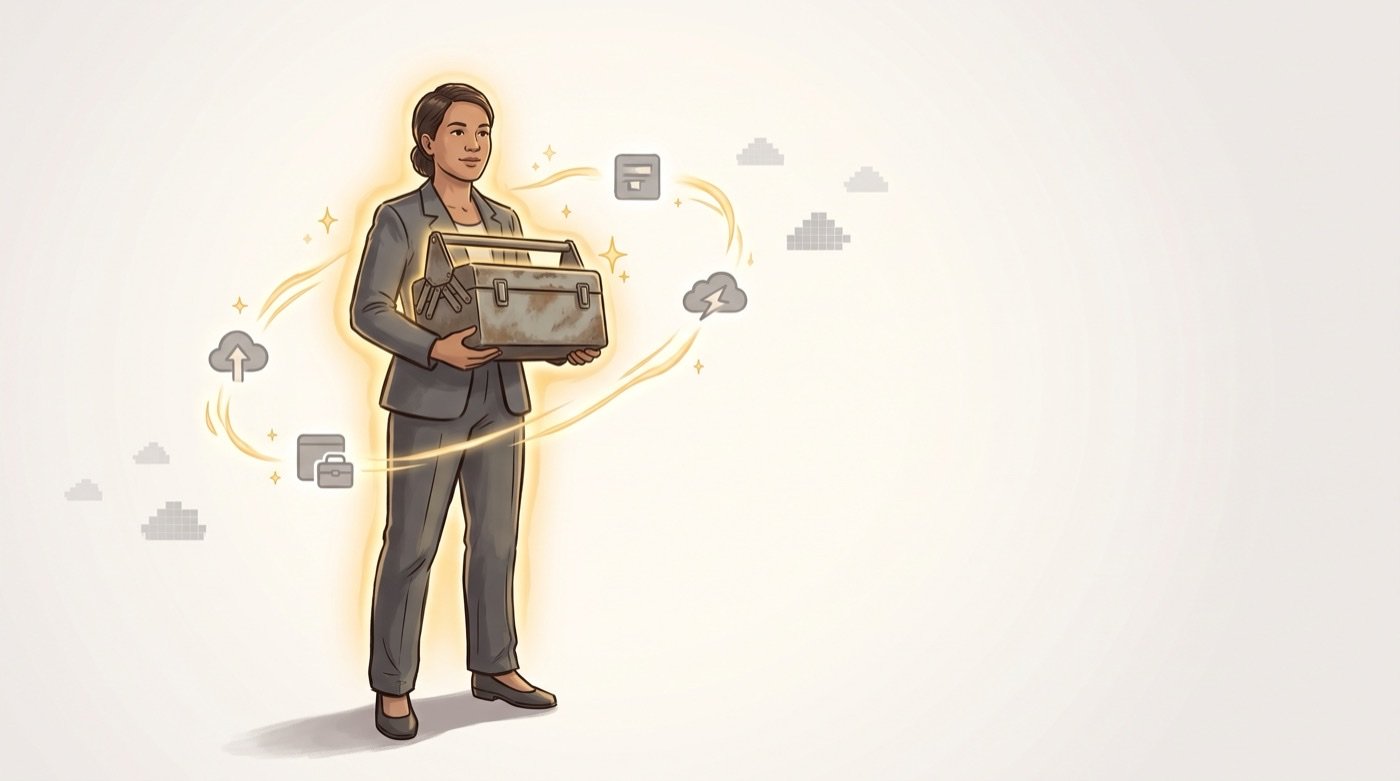
The tool wrapped around the model is a different thing. That part knows your business. Which inbox to watch, what to do with a new lead, how your invoices are shaped, what “done” looks like for you. That part should be yours. Not licensed, not rented. Yours, in a form you can hold onto.
The mistake is letting both layers be somebody else’s. Rent the engine if you must. Own the car.
What owning a tool actually means
Owned doesn’t mean you wrote it from scratch. It means the thing lives somewhere you control, in a form you can work with:
- It’s a plain, readable file on your machine, not a screen you log into
- You can open it and see what it does
- You can change it, or pay someone to change it, without asking permission
- You can copy it, keep it, and still run it next year if the vendor is gone
A tool like that can’t be taken away by a pricing email. It doesn’t sunset. The worst a company can do is stop improving it, and you’ll still have the working copy you already installed.
Why this matters more every month
The model layer is going to keep churning. New releases, new limits, new prices, roughly every few weeks. That part is genuinely fine. You can move to a different model when you need to, the way you’d switch electricity suppliers.
What you don’t want is the layer between your business and the model to be a black box you rent by the month. Because that layer carries your work. If it’s a login, your work is a hostage. If it’s a file you own, your work is yours.
Why we shipped a marketplace, not another product
This is the whole reason we built our plugin marketplace the way we did, rather than launching one more SaaS with a monthly fee.
Every plugin is open and MIT-licensed. You install it, and you own that copy. Read it, fork it, keep it. If we vanished tomorrow, the plugins you’d installed would go on working exactly as they did the day before, because they run on your machine, not ours. There’s no server of ours in the loop deciding whether you’re still allowed.
We’d rather build things you can keep than things you have to keep paying us for. That’s a worse business model on paper. It’s a much better deal for the person trying to get their Tuesday under control.
The test
Here’s the question to ask of any tool before you build a workflow on it: if this company tripled its price, removed the feature I rely on, or disappeared, what would I be left holding?
If the honest answer is “nothing,” it isn’t your tool. It’s someone else’s, and you’re a tenant.
Owning the things you depend on is the same quiet engineering as keeping a local copy of your files, nothing to do with distrust or going off-grid. You just want the important parts to survive somebody else’s bad quarter.
If you’re not sure which parts of your stack you actually own, that’s a good conversation to have. Get in touch.