A working method

The Five Moves

AI is a technology, not a product. Most people use it like a vending machine — paste a prompt, take what falls out, blame the tool when it's wrong. The work is one level deeper: in how you use it, not which one you pick.

These are the five moves we teach in our workshops and apply in every system we build. Each one has a real demo behind it.

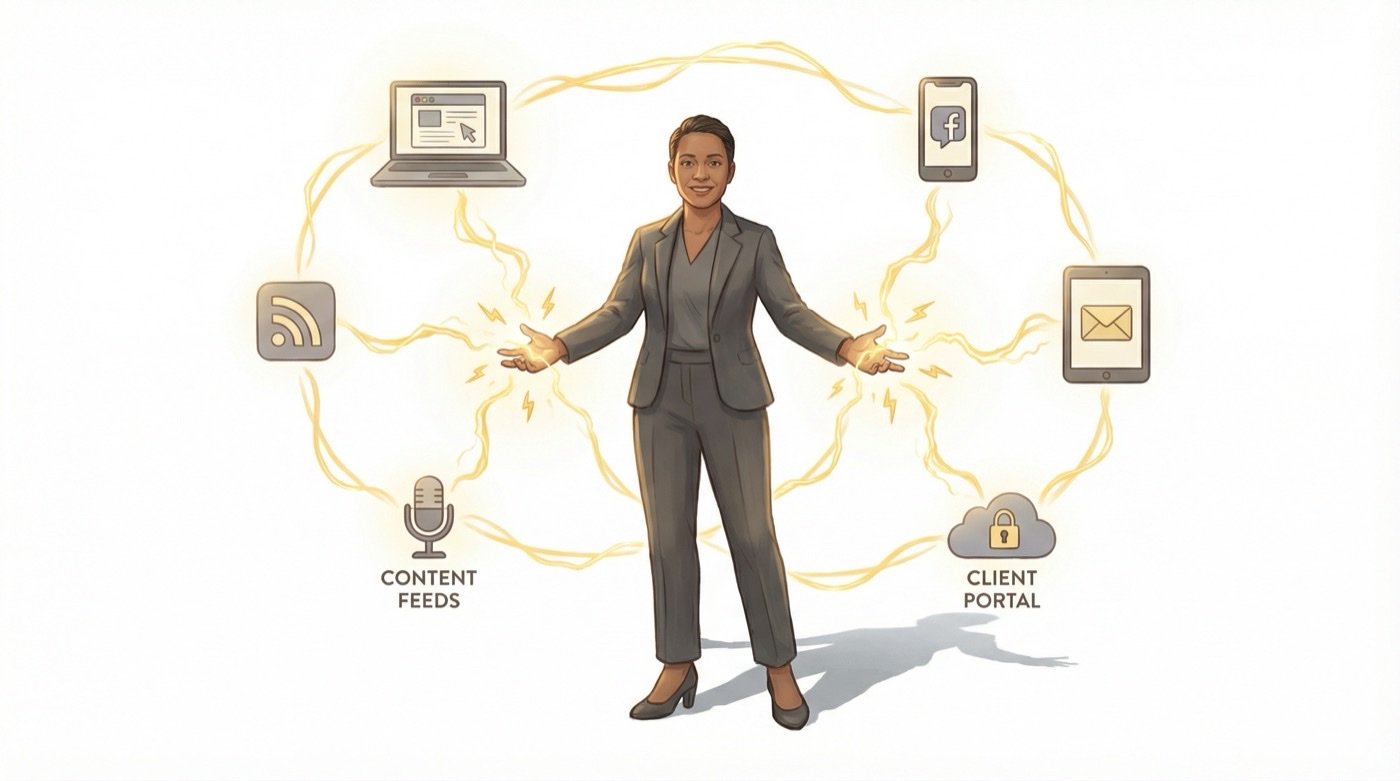
A practitioner surrounded by their tools — connected, coherent, on call
A practitioner asking a floating wrench what it needs, golden energy looping between them in conversation
Move 1

Talk to the wrench

Ask the tool about its job before you ask it to do work.

The trap

Type the task into ChatGPT and hope. When the output's wrong, blame the tool.

The win

Claude told us exactly what data it would need to draft those emails — five fields. Those five fields became our form. The output was right on the first call.

“If you think technology will solve your problem, you don't understand your problem and you don't understand technology.” — Roger Needham

A practitioner holding a list with golden X marks crossing items out, the negations rendered as the headline
Move 2

Use negatives

Tell the model what NOT to do. That's the sharpest instrument you have.

The trap

Listing what you want and hoping the model figures out the rest. It defaults to whatever's most common in its training — which is exactly what you don't want.

The win

We told Claude what NOT to do (don't pitch product, don't name-drop, don't lean on jargon) before we told it what to do. The 'don'ts' list is the headline output, not a footnote.

A practitioner gesturing toward a grid of labeled slots filling with golden content
Move 3

Use structure

Headings and bullets in your prompt. The shape of the response mirrors the shape of the prompt.

The trap

Asking in one long paragraph and getting one long paragraph back. Then re-prompting to add structure. Then re-prompting again.

The win

Named output slots. Fixed counts. Consistent labels. The model fills the slots — every time, in the same order.

A practitioner with a drafting compass at the center of four labelled cards arranged at cardinal points
Move 4

Run it through PAST

Purpose. Audience. Scope. Tone. Four questions to ask before you type.

The trap

Skipping straight to 'write me an X about Y'. Getting something generic. Editing for an hour.

The win

The four PAST questions become labelled output fields. Generic prompts become tailored briefs because the framework forces the right inputs.

PAST stands for Purpose, Audience, Scope, Tone — the free framework behind this move. Read the PAST Framework →

A practitioner pouring curated data shapes into a funnel that emits a concentrated golden beam
Move 5

Feed it better inputs

The data layer is a variable too. Clean inputs beat clever prompts.

The trap

Sweating the prompt while the model has no context. Spending hours tweaking words when the real lever is what you put on the input side.

The win

Same model. Same five seconds. Add your style, your inventory, your data — the output becomes a working advisor instead of a vending machine.

Want these moves applied to your actual work?

We build personalised AI tools for solopreneurs and small operators who already know their work — we just turn the stuff they do well into systems that compound. Start with our /discover brief — it takes ten minutes, and you'll get back a Business DNA Brief naming your highest-leverage move.